Studio
About
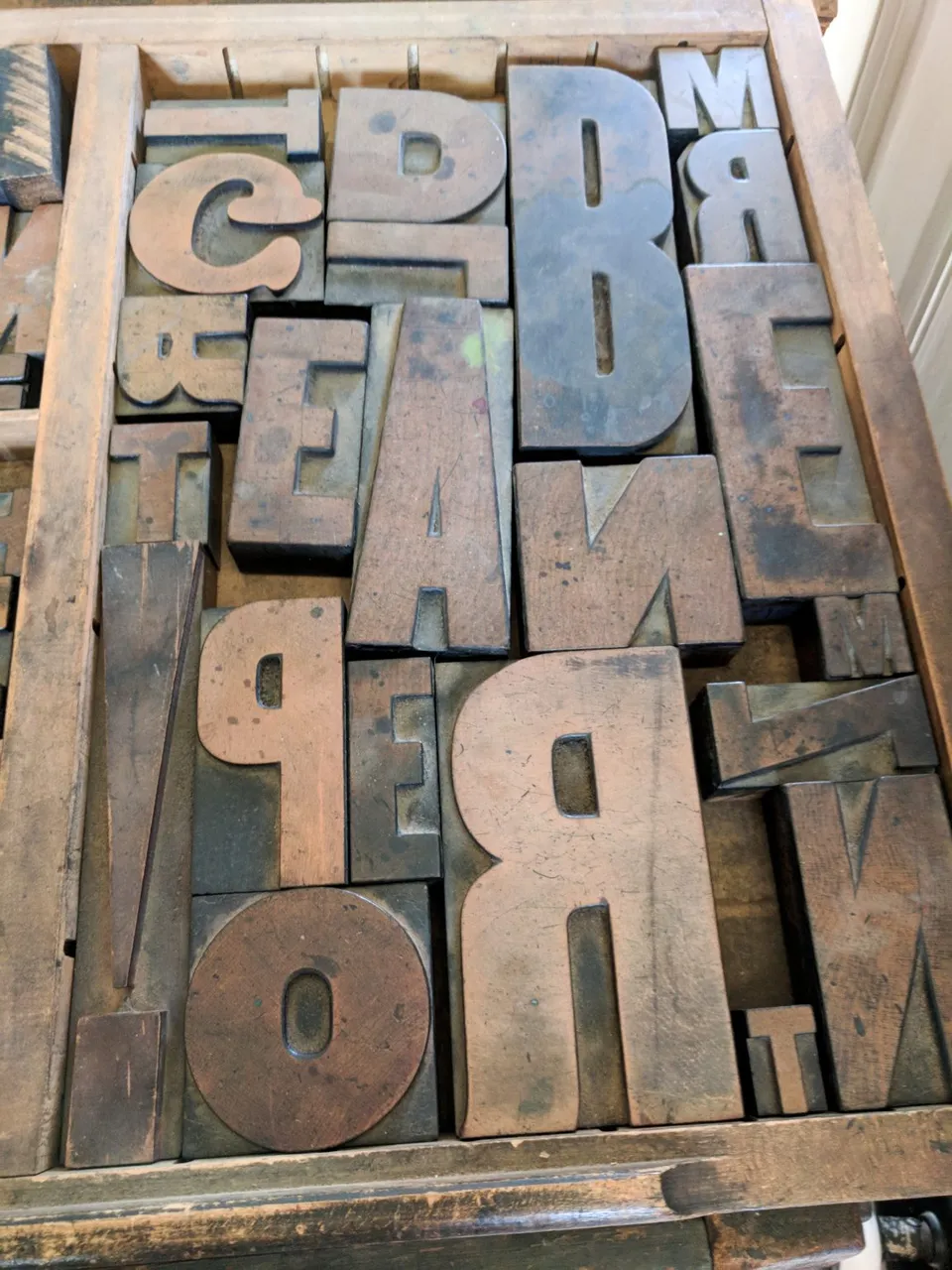
A sheet of close studies of the materials of print, the letters, points, blocks and pigments that make a mark before any design exists.
Each study is short. It names one object, looks at how it behaves, and ends with a swatch row, a type sample or a photograph that someone else could pick up and use.
| Practice | Studies in print, drawing and colour |
|---|---|
| Materials | Wood type, carved blocks, pencils, watercolour |
| Output | Square sheets, one study each |
| Enquiries | hello@example.com |
Specimen · Instrument Serif 400
Worn edges, soft ink
Headline · Instrument Serif italic
Worn edges, soft ink
Text · Jost 400, 18 / 1.6
Worn edges, soft ink. A letter that has printed for years loses its corners first, and its counters fill a little with every pass.
Method
Look at the tool
Every study begins with the object that makes the mark: a letter, a point, a block, a pan of colour.
Make one test
A single print, line or stroke on plain paper shows more than a page of notes about it.
Name what you see
Colours get names and values, faces get sizes, surfaces get a word. Vague notes are rewritten.
Keep the colophon
Each sheet records its materials and faces, so the next study can start where this one stopped.